
News
New Energy for Battery Research in Germany
28.01.2026
From January 20 to 22, 2026, the battery association KLiB e. V. hosted the 14th Battery Forum Germany with the support of the Federal Ministry of Research, Technology, and Space (BMFTR).
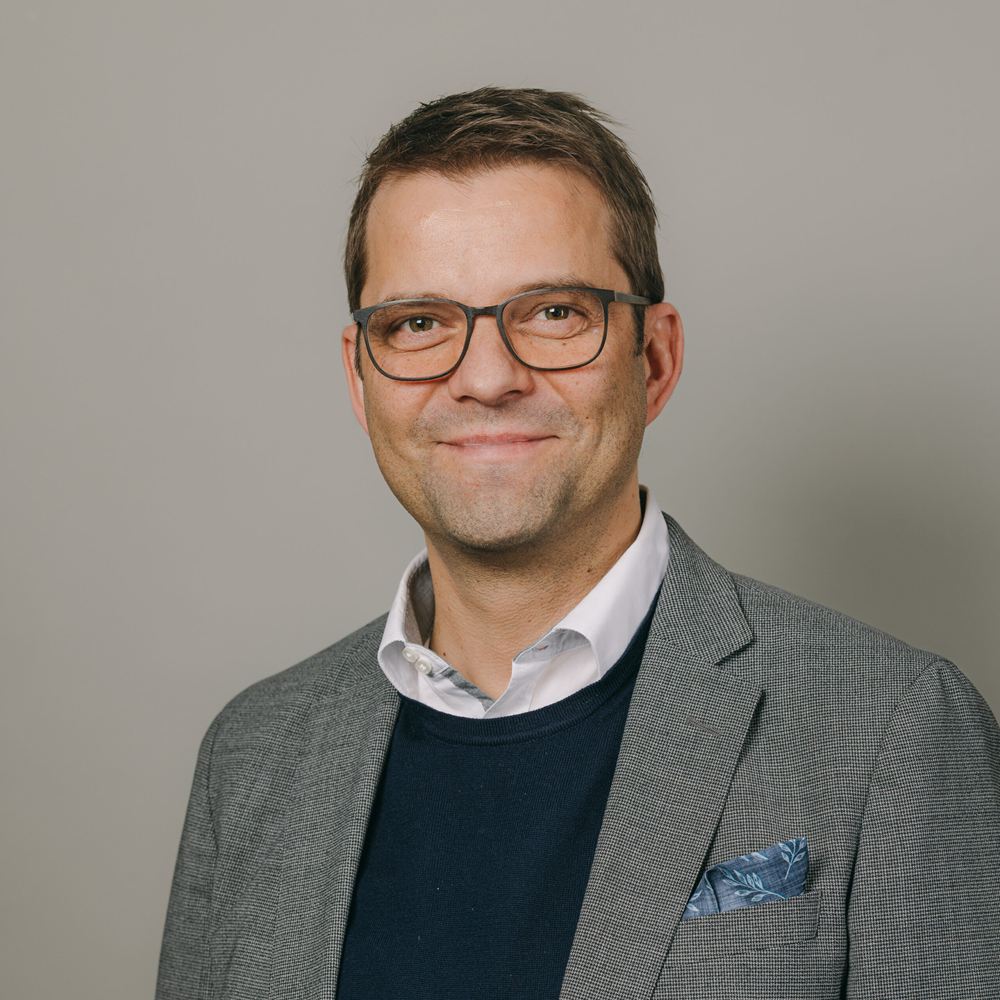
BayBatt was represented at the Battery Forum by its director, Prof. Dr.-Ing. Michael Danzer, who was also appointed to the BMFTR Advisory Board for Battery Research in Germany last year. The advisory board advises the ministry on issues of strategic research planning for electrochemical energy storage systems, regardless of the applications. It comprises 67 high-ranking representatives from industrial companies and research institutions along the battery value chain.
Prof. Danzer comments: "Being appointed to the BMFTR advisory board is a sign of appreciation and nationwide recognition of BayBatt's work. It gives me the opportunity to network our institute with relevant stakeholders from politics, research, and industry in the field of battery research and development. And it gives me the opportunity to influence the discussions, comment on drafts for funding measures, and contribute new proposals."
Just a few days before the start of the Battery Forum, the BMFTR presented its new concept for battery competence clusters from 2026, which is based on the High-Tech Agenda Germany (HTAD). The HTAD directly addresses batteries in two key technology fields: fusion and climate-neutral energy generation, and technologies for climate-neutral mobility. In doing so, it has set itself a central and ambitious goal of establishing competitive battery production and recycling in Germany by 2035. The path to achieving this goal lies in attaining technological sovereignty in battery technologies, from materials and battery cell components to battery cells themselves, and from basic research to scaling up to industrial production processes. It is foreseeable that the establishment of an efficient, competitive, and sovereign battery industry in Germany and Europe will only succeed with a strong academic-industrial innovation ecosystem.
A central element of this is the roadmap process for battery research, which is designed as an open participation format for various stakeholders, from industry and research to states, ministries, and associations. The aim is to jointly identify research needs, technological priorities, and innovation paths and to develop them dynamically.
The German innovation ecosystem is also to be sustainably strengthened by a new approach to the proven competence clusters. Since 2016, the BMFTR has gradually funded up to seven battery competence clusters on various topics under its “Dachkonzept Batterieforschung“ (Battery Research Umbrella Concept). These are now being adapted and continued via the “Clusters Go Industry” funding guideline. New competence clusters are also to be initiated in order to close competence gaps. In addition, the transfer of research results to industry is to be accelerated and sustainability and security of supply improved.
The focus will be on battery materials, battery production, and solid-state batteries. Research into recycling and the battery circular economy is also to be strengthened. The call for the new cluster framework plans is currently underway. Once the new clusters have been published, it will be possible to submit project ideas for the respective clusters. It is expected that the first projects will be able to start at the end of the year.
Prof. Danzer: “After a long dry spell in terms of funding policy, we at BayBatt are very pleased about the publication of the cluster calls for proposals. Now it is time to translate the expertise built up in Bayreuth over the last few years into convincing project ideas. Our goal is for BayBatt researchers to be strongly represented in all clusters, as was already the case in the last funding phase.”
Particularly welcome news for battery research in Germany was the announcement by Federal Research Minister Dorothee Bär at the Battery Forum that this year's budget already includes €227 million for battery research. This means that the ministry's funding is back to the same level as before the dip in funding over the past two years. There are even prospects of an increase in funding over the next few years.
Ms. Bär emphasized that Germany is relying on its excellent research landscape and new funding instruments with the HTAD. Battery technologies play an important role within the HTAD because they are crucial for sustainable mobility, the energy transition, industrial value creation, and the technological sovereignty of Germany and Europe. The next generation of batteries – whether sodium-ion batteries or solid-state batteries – is to be “Made in Germany.”
Prof. Danzer on the announcements made by political representatives at the Battery Forum: “While a cautious disillusionment had spread throughout the community over the past two years, to put it mildly, this year in Berlin there was a completely different mood, one of optimism and determination. Battery research and development is embedded in a technology roadmap and is clearly linked to the strategic goal of industrial implementation in Germany.”